

Key Takeaways
- UHC has temporarily delayed the rollout of restrictive changes to its RPM coverage policy.
- Effective January 1, 2026, UHC planned to limit RPM coverage to patients with heart failure or hypertensive disorders of pregnancy.
- With the policy delay, providers can continue to bill UHC for RPM for hypertension, diabetes, COPD, and other chronic conditions until further notice.
- RPM advocacy groups have fiercely opposed the new policy, and the delay is an encouraging sign that public pressure on UHC is making an impact.
In UnitedHealthcare’s 2026 RPM Rollback: Why Limiting Remote Monitoring Hurts More Than It Helps, we covered UnitedHealthcare’s (UHC) planned changes to its remote patient monitoring (RPM) coverage. Under a revised policy, only patients with heart failure or hypertensive disorders of pregnancy would be covered by the insurer for remote monitoring. Everyone else, including the millions managing chronic hypertension, diabetes, or COPD, would lose RPM coverage altogether.
On December 17, 2025, UnitedHealthcare (UHC) sent an email to its members announcing a delay in implementing those changes, which were originally slated for January 1, 2026. UHC went on to say that the new effective date will be communicated later.
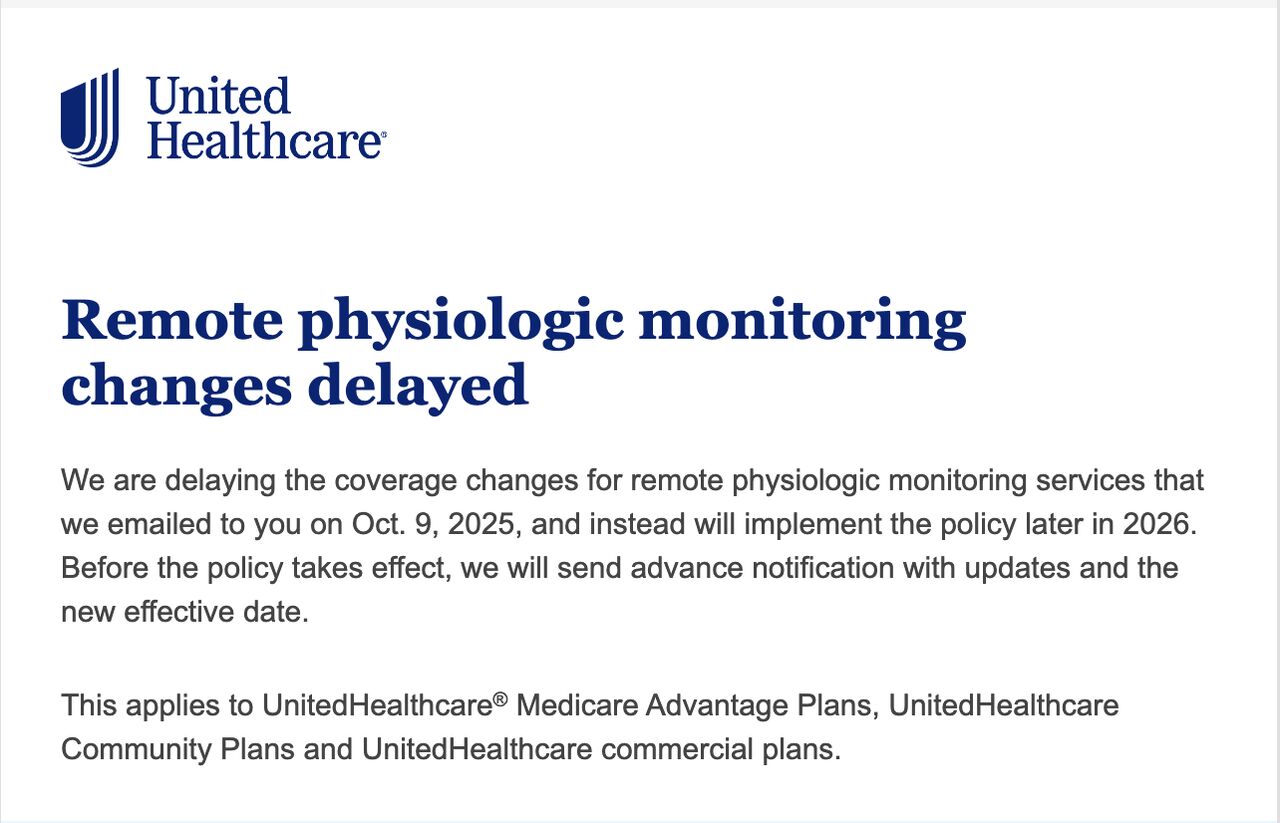
We are awaiting a more formal update to UHC policy documentation. However, this pause appears to offer providers a short-term reprieve and avoid an abrupt discontinuation of RPM services for patients living with chronic disease. We at Prevounce will continue to monitor the situation closely and update this article as more information emerges.
Widespread Pushback From Physicians and Industry Groups
Since UnitedHealthcare first unveiled its RPM policy changes, there has been a groundswell of fierce criticism from across the healthcare community.
Provider advocates have argued that UHC either willfully ignored or misinterpreted clinical research findings that clearly show RPM improves outcomes and lowers costs for patients with a spectrum of chronic conditions.
Legal experts have asserted that UHC’s policy, particularly as it relates to Medicare Advantage (MA) coverage, is a seemingly clear violation of Centers for Medicare & Medicaid Services (CMS) policies. CMS stipulates that MA plans must cover “all services that are covered by Part A and Part B of Medicare that are available to beneficiaries residing in the plan’s service area.”
RPM technology leaders, including Prevounce, have publicly urged UHC to reconsider or reverse its policy, arguing that it fails to reflect large-scale, real-world evidence that shows improved patient outcomes when RPM is integrated in good faith into chronic care workflows.
It would appear that UHC felt the public pressure and has decided to shift course, at least temporarily. It is critical that this pressure continues from across the industry to ensure the best outcome for the millions of patients who benefit from RPM services.
What the Delay Means and What Is Still at Stake
The policy delay is not a revival of full coverage; it is a postponement of coverage removal. Practices can continue to bill for RPM under current UHC policy for now, but the underlying restrictions could still be implemented at a future date.
Providers should use this window strategically to:
- Audit current RPM populations to identify patients who would be affected if coverage narrows
- Document outcomes and clinical value to support continued reimbursement and advocacy
- Engage with payer clinical and policy teams and leverage industry advocacy tools where appropriate
Follow us on LinkedIn or sign up for our newsletter to stay current on the story as it develops.